Tongue Signs of Qi Deficiency and What They May Mean
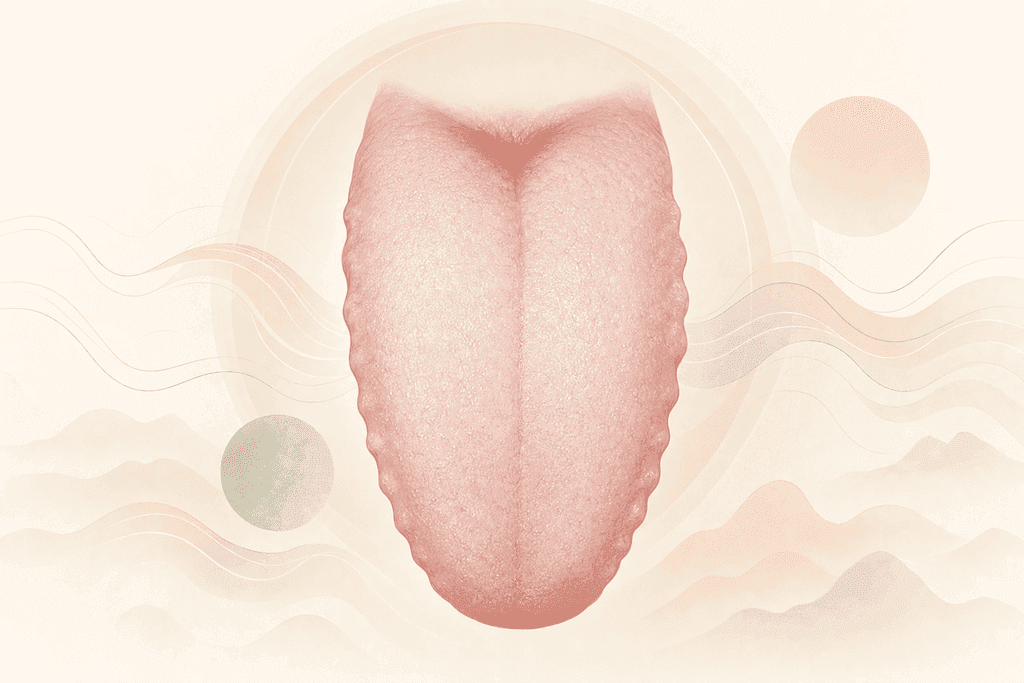
A pale, puffy tongue with tooth marks along the edges and a thin white coating is the classic sign of qi deficiency in Chinese Herbal Medicine. If you look in the mirror and see a tongue that looks swollen, with scalloped edges where it presses against your teeth, that is often read as a sign your body's energy is running low. Practitioners have used tongue observation this way for centuries, checking color, shape, coating, and moisture as a window into what is happening inside the body, long before lab panels existed.
For a lot of women in their 30s and 40s, this shows up alongside fatigue that a full night of sleep does not touch, and digestion that seems to flare for no clear reason. Tongue signs will not replace bloodwork, but they cost nothing to check and they can point you toward a pattern worth understanding better.
Why Your Tongue Reflects Your Energy
Chinese Herbal Medicine treats the tongue as a mirror of what is happening in the organs underneath. The theory holds that blood and fluid move through the tongue tissue constantly, so any shift in how well the body is functioning shows up there before it shows up anywhere else you can see.
Qi is described as the working energy that powers digestion, keeps muscles firm, and gives you the stamina to get through a normal day. When qi runs low, the body cannot push blood to the surface tissues as well, and the tongue is often the first place that shows, losing color and firmness before other symptoms become obvious.
Different features point to different parts of the pattern, which is why practitioners read several signs together rather than one on its own, a method outlined in Pulse and Tongue: The Art Behind Chinese Medicine.
Tongue feature | What it may indicate |
|---|---|
Pale body color | Weak blood flow to tissue |
Loss of firmness | Low muscle tone from low qi |
Thin, watery coating | Fluids not being processed well |
Cracks down the center | Long-term depletion of energy |
Individual patterns like these are exactly what a quiz built to match herbal formulas to symptom patterns is designed to sort through.
A Pale or Puffy Tongue Body
A healthy tongue is usually a pinkish red, similar to the inside of your lip. When the body reads as pale instead, practitioners connect it to qi and blood that are not circulating with full force out to the surface tissue.
A puffy or swollen body tells a related but separate story. It suggests fluids are not being moved and processed well, which is why a swollen tongue often sits alongside cold hands and feet or a complexion that looks washed out rather than flushed. This is not the same as anemia, but a pale, puffy tongue that sticks around for weeks is worth bringing up with a provider, especially if bloodwork already came back normal.
Pinkish red body: typical, no flag
Pale body: reduced blood and qi circulation
Puffy or swollen body: fluids not processed well
Pale plus cold hands and feet: often seen together
Scalloped or Tooth Marked Edges
Scalloped edges form when a swollen tongue body presses outward against the teeth, leaving a wavy, indented line along each side. In Chinese medicine this is tied to the spleen's role in digestion, specifically its job of turning food into usable energy rather than letting it sit heavy.
People with this marker often notice bloating after meals, loose stools, or a sluggish, heavy feeling once they eat. It shows up a lot in people who eat lunch at their desk in under ten minutes or who eat while stressed and distracted, since both habits are thought to strain digestive function over time.
Bloating that starts within an hour of eating
Stools that run loose rather than formed
A heavy or sluggish feeling after meals
Eating fast or eating while working
A Thin or Patchy Coating
The coating on top of the tongue is a separate layer from the body underneath, and it tells a different part of the story. A thin white coating that looks weak, thin, or peeled away in spots is often read as a sign of depleted qi, distinct from a thick, greasy coating, which points toward a pattern of dampness instead.
Patchy or map-like coatings, where bare patches sit next to coated ones, sometimes point to longer-term depletion rather than something that came on last week. Coating can shift from morning to evening or after a spicy meal, so practitioners look at the pattern over several days, not a single glance in the mirror.
Coating type | What it may suggest |
|---|---|
Thin, weak, or peeled | Depleted qi |
Thick and greasy | Dampness pattern |
Patchy or map-like | Longer-term depletion |
What These Signs Often Show Up With
These tongue features rarely travel alone. They tend to show up alongside fatigue that a full night of sleep does not fix, digestion that flares without an obvious food trigger, and a general sense of running on low reserves.
Other companion signs include shortness of breath during normal exertion, like climbing a flight of stairs, a voice that sounds quieter or thinner than usual, and catching colds more often or taking longer than a week or two to bounce back from a minor one. Details on how qi deficiency can show up more broadly are covered in this overview of qi deficiency, which lines up with what practitioners look for on the tongue itself.
Fatigue that persists despite adequate sleep
Digestive flares with no clear trigger
Getting winded during light activity
Frequent colds or slow recovery
A quieter voice or lower stamina for talking
Read the Pattern, or Chase One Symptom
A pale, puffy tongue with tooth marks tells you one thing is off, not what caused it. Practitioners pair that observation with pulse quality, sleep, digestion, and cycle history before naming a pattern, because the same tongue feature can point to different root causes depending on what travels with it.
Conventional care often treats fatigue, bloating, and irregular cycles as separate complaints, each sent to a different specialist. Chinese Herbal Medicine reads them as connected expressions of one underlying pattern, which is the reasoning a symptom quiz uses when it asks about several complaints at once instead of just the one that brought you in.
Reading style | What it looks at | Risk if used alone |
|---|---|---|
Symptom-by-symptom care | One complaint at a time | Misses the shared root cause |
Tongue photo only | Color, coating, shape | No context from pulse or history |
Full pattern reading | Tongue, pulse, symptoms together | Requires more input from the reader |
A single photo sent to an app or a friend cannot replace that fuller picture, as the method described in What is Chinese Tongue Diagnosis? makes clear. If your tongue matches what you read here but your symptoms do not line up, treat the tongue sign as one data point worth mentioning, not a diagnosis on its own.
What to Track Before You Guess at a Fix
For the next week, check your tongue each morning before you eat or drink anything, since food and liquid can change its color and coating for an hour or two. Write down what you see next to your usual notes on energy and digestion, so you can see if a pale, puffy tongue shows up on the same days as the afternoon crash or the bloating. One tongue sign on its own is not a pattern. A tongue sign paired with a week of fatigue and digestive notes gives a licensed herbalist something real to work with, which is the kind of input Jadewell's Signature Formula quiz is built to sort through before any formula gets matched to you.
Common Questions About Tongue Signs
Can a photo of my tongue really tell me anything on its own?
A photo can show you color, coating, and shape, which is useful for tracking changes over time. But a picture alone cannot factor in your pulse, sleep, or cycle history, so it should not be the only thing you base a decision on. Use it as one piece of your notes, not a verdict.
Does what I ate or drank right before change how my tongue looks?
Yes. Coffee, red wine, and spicy food can stain or thicken the coating for an hour or two, and cold drinks can temporarily change the color of the body underneath. That is why checking first thing in the morning, before anything touches your mouth, gives a more honest baseline than checking after lunch.
Can qi deficiency signs overlap with other patterns at the same time?
Yes, and it is common rather than rare. A tongue can show pale, puffy qualities from low qi alongside a coating that hints at dampness, or cracks that suggest a separate issue with fluids. This is part of why a licensed herbalist reviewing your full quiz answers, the way Jadewell's Signature Formula process works, tends to catch more than a single tongue feature can on its own.
Should I bring up my tongue observations with my regular doctor?
It is worth mentioning, especially if you already have a pale, puffy tongue alongside fatigue or digestive symptoms that have not resolved. Your doctor may not read the tongue the way Chinese Herbal Medicine does, but persistent physical changes are still relevant information for ruling out other causes.