Chinese Herbs for Fatigue Based on Your TCM Pattern
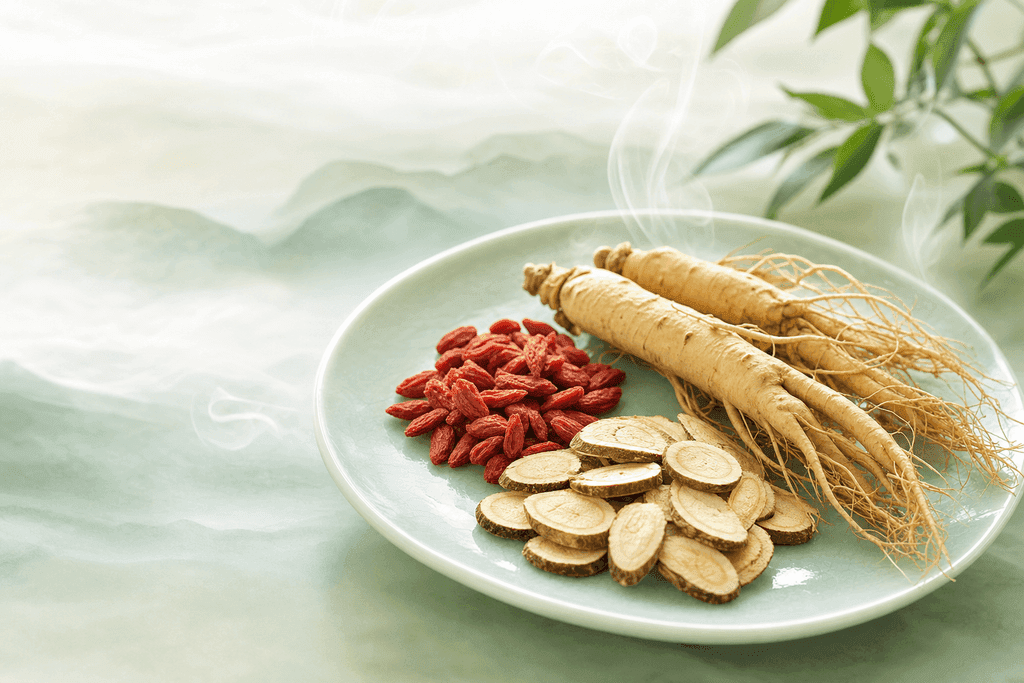
You've tried sleeping more, cutting caffeine, and adjusting your schedule, but the fatigue still sits heavy in your body like a weight that won't lift. In Chinese Herbal Medicine, that's because fatigue isn't just one thing. The herbs that help someone else might do nothing for you, and understanding why starts with identifying your specific pattern.
How Chinese Herbal Medicine Views Fatigue
When you walk into a regular doctor's office complaining about fatigue, you'll probably get some blood tests and maybe a diagnosis like anemia or thyroid problems. Chinese medicine takes a completely different approach. Instead of looking for one single cause, practitioners examine your entire body as a connected system. They ask about your sleep, digestion, body temperature, stress levels, and dozens of other details that might seem unrelated to your tiredness.
Patterns Not Just Symptoms
The big difference with Chinese herbs for fatigue is that TCM focuses on identifying your specific pattern rather than treating fatigue as one condition. Two people with exhaustion might get completely different herbal formulas because their underlying patterns are different. One person might feel cold all the time and have digestive issues, while another runs hot and feels wired but tired.
TCM recognizes three main categories that cause fatigue:
Deficiency conditions where your body lacks vital energy, blood, or fluids
Stagnation problems where energy gets stuck and can't flow properly
Excess conditions where something like heat or dampness overwhelms your system
Multiple Systems Working Together
Your fatigue might involve several organ systems at once in TCM terms. The Spleen system handles digestion and energy production from food. The Kidney system stores your deep reserves and controls long-term vitality. The Liver system manages the smooth flow of energy throughout your body. When one or more of these systems gets out of balance, chronic exhaustion follows.
Research on Chinese herbal medicine for post-viral fatigue shows how these formulas work on multiple body systems simultaneously, which is why they can address complex fatigue patterns that don't respond to single-target treatments.
TCM System | Role in Energy | Common Signs When Imbalanced |
|---|---|---|
Spleen | Transforms food to energy | Poor appetite, loose stools |
Kidney | Stores vital reserves | Lower back pain, cold limbs |
Liver | Moves energy smoothly | Irritability, tension headaches |
Heart | Houses the spirit | Poor sleep, anxiety |
Getting Your Pattern Diagnosed
A proper TCM diagnosis looks at way more than just how tired you feel. Practitioners check your tongue color and coating, feel your pulse at different positions, and ask detailed questions about when your fatigue is worst. Do you wake up exhausted or crash in the afternoon? Does rest help or make no difference? These details point to different root causes that need different herbal approaches.
Our Signature Formula gets matched to your specific pattern through a detailed quiz that a licensed herbalist reviews before shipping. This personalized approach means you're getting chinese herbs for fatigue that actually address what's happening in your body, not just a generic energy supplement.
Qi Deficiency Patterns and Tonifying Herbs
Most people who feel tired all the time fall into what Chinese Herbal Medicine calls a Qi deficiency pattern. This isn't just regular tiredness that goes away after a good night's sleep. It's the kind of exhaustion that gets worse when you try to do things, like your body is running on empty no matter how much you rest. You might notice your voice gets quieter as the day goes on, or you feel short of breath climbing stairs that never used to bother you. Your appetite might be off, and your digestion might lean toward loose stools more often than not.
The herbs used for Qi deficiency work differently than caffeine or stimulants. They're meant to rebuild your body's foundational energy over time, not give you a quick boost that crashes later.
Herb Name | Chinese Name | Primary Action | Best For |
|---|---|---|---|
Ginseng | Ren Shen | Strongly tonifies Qi | Severe exhaustion |
Astragalus | Huang Qi | Tonifies Qi, raises Yang | Immune support, fatigue |
Codonopsis | Dang Shen | Gently tonifies Qi | Mild deficiency |
Atractylodes | Bai Zhu | Strengthens digestion | Poor appetite, loose stools |
Ginseng and Astragalus are the heavy hitters in this category. Traditional practice pairs them together because they work on different aspects of Qi. But not everyone needs the strongest option. Codonopsis offers a gentler approach for people who are depleted but not completely wiped out. When digestive issues are part of the picture, Atractylodes gets added to strengthen the Spleen's ability to transform food into usable energy.
These herbs rarely work alone. A formula like Si Jun Zi Tang combines four herbs that support each other, addressing both the root cause and the digestive symptoms that often come with Qi deficiency. Research on Traditional Chinese Medicine for chronic fatigue shows these combinations have been studied for their effects on energy levels and immune function.
Blood Deficiency and Nourishing Formulas
Blood deficiency in Chinese Herbal Medicine doesn't always show up on standard lab work. You might have normal iron levels but still experience the dizziness, pale complexion, and dry skin that practitioners associate with this pattern. The fatigue feels different too. It often comes with a floaty, lightheaded quality, and many people notice it gets worse around their menstrual cycle or involves periods that are lighter than they used to be.
The connection between Blood deficiency and hormonal patterns is why this shows up so often in women between their late twenties and mid-forties.
Dang Gui (Angelica sinensis) is considered the primary Blood tonic and appears in most formulas for this pattern
Shu Di Huang (prepared Rehmannia) nourishes both Blood and Yin, making it useful when dryness is also present
Bai Shao (White Peony) nourishes Blood while also helping regulate menstrual cycles
Long Yan Rou (Longan fruit) supports both Blood and Qi, which is helpful when both are deficient
Si Wu Tang, or Four Substance Decoction, is the foundational formula for Blood deficiency. It's been used for centuries and serves as the base for many other formulas that address fatigue with menstrual irregularities or other Blood deficiency signs. The herbs in these formulas work together in specific ratios, which is why traditional formulation matters more than just taking individual herbs.
Our Signature Formula approach matches you to classical formulas like these based on your specific pattern, not a one-size-fits-all approach to fatigue.
Yin Deficiency and Cooling, Moistening Herbs
Some people are exhausted but can't sleep well. They wake up sweating at night, feel warmer in the afternoon, and always have a dry mouth no matter how much water they drink. This is what Chinese Herbal Medicine calls Yin deficiency, and it requires a completely different herbal approach than Qi deficiency. The fatigue comes with a wired, restless quality that makes it hard to settle down even when you're bone tired. Traditional perspectives on fatigue recognize this as a pattern where the body's cooling and moistening resources are depleted.
Yin-nourishing herbs are cooling and moistening by nature. They're meant to replenish what's been burned through by stress, overwork, or chronic illness.
Herb Name | Chinese Name | Key Property | Traditional Use |
|---|---|---|---|
Fresh Rehmannia | Sheng Di Huang | Clears heat | Night sweats, irritability |
Ophiopogon | Mai Men Dong | Moistens dryness | Dry throat, thirst |
Goji berry | Gou Qi Zi | Nourishes Liver/Kidney | Vision, lower back |
Ligustrum | Nu Zhen Zi | Tonifies Yin | Premature graying |
Liu Wei Di Huang Wan is the classic formula for Kidney Yin deficiency. It contains six herbs that work together to nourish Yin without being too heavy or hard to digest. The formula gets modified based on whether heat signs are more prominent or if there are other symptoms involved. This is why pattern differentiation matters so much in Chinese Herbal Medicine.
Yang Deficiency and Warming Formulas
If you're always cold, especially your hands and feet, and your fatigue comes with lower back soreness and frequent nighttime urination, you might be looking at a Yang deficiency pattern. This is the opposite of Yin deficiency. Where Yin deficiency runs hot and dry, Yang deficiency runs cold and often involves fluid retention or loose stools. The exhaustion feels heavy and cold, like you can't generate enough warmth or energy no matter what you do. Many people with this pattern pile on blankets at night and still feel chilly.
Yang-tonifying herbs are warming and help the body generate the metabolic heat and energy it needs to function.
Rou Gui (Cinnamon bark) warms Yang and helps dispel internal cold
Fu Zi (prepared Aconite) is one of the strongest Yang tonics but must be properly prepared and used in specific formulas
Du Zhong (Eucommia bark) tonifies Kidney Yang while strengthening the lower back
Ba Ji Tian (Morinda root) warms Kidney Yang and is gentler than Fu Zi
Jin Gui Shen Qi Wan addresses Kidney Yang deficiency with a combination of warming and nourishing herbs. It's based on Liu Wei Di Huang Wan but adds warming herbs to address the cold symptoms. This shows how Chinese Herbal Medicine formulas get modified based on whether someone needs more warming or more cooling support. Different approaches to treating fatigue recognize that what works for one pattern can make another pattern worse.
Getting the right formula for your pattern is why we built a detailed pattern quiz that gets reviewed by a licensed herbalist before your formula ships. Taking warming herbs when you have a Yin deficiency pattern, or cooling herbs when you have Yang deficiency, won't help and might make things worse. The goal is to match the herbs to what your body actually needs, not just throw everything at fatigue and hope something works.
Why Pattern Matching Matters More Than Symptom Chasing
Here's something most people don't realize when they start looking into Chinese herbs for fatigue: buying a bottle labeled "energy support" might do absolutely nothing for you. The reason comes down to how Traditional Chinese Medicine actually works. Unlike Western supplements that target symptoms directly, Chinese herbs need to match your specific pattern or they simply won't help. In some cases, taking the wrong herbs can actually make you feel worse.
Think of it like trying to unlock a door with the wrong key. You might have the best quality key in the world, but if it doesn't match the lock, you're not getting in. The same principle applies to herbal formulas and your body's unique imbalances.
What Happens When Patterns Don't Match
Taking herbs without proper pattern identification creates several problems that most people don't anticipate:
Warming herbs given to someone with heat patterns can increase irritability and worsen sleep
Tonifying herbs for deficiency might cause digestive upset if dampness is present
Cooling herbs for heat patterns can further deplete someone who's already cold and deficient
Multiple overlapping patterns get missed when only looking at one symptom
According to research on TCM approaches to fatigue, practitioners consider dozens of factors beyond just feeling tired. Your tongue coating, pulse quality, digestive patterns, and sleep quality all paint a picture that reveals your true pattern.
The Gap Between Self-Diagnosis and Professional Assessment
Most online resources oversimplify pattern identification because the full diagnostic process requires years of training. A licensed herbalist looks at the complete clinical picture, not just your main complaint. They notice contradictions in symptoms that reveal hidden patterns.
Assessment Type | Accuracy Level | Patterns Identified |
Self-diagnosis | Low to moderate | 1-2 obvious patterns |
Online quiz only | Moderate | 2-3 primary patterns |
Professional review | High | Multiple overlapping patterns |
This is why Jadewell's Signature Formula combines an initial pattern quiz with review by licensed herbalists before shipping. You get the convenience of online ordering with the safety net of professional oversight, which helps bridge that gap between guessing and knowing your actual pattern.
Finding Your Pattern and the Right Herbs
The reason chinese herbs for fatigue work differently for different people comes down to pattern identification. What helps someone with Qi deficiency might do nothing for someone with Blood deficiency, and the wrong herbs can sometimes make things worse. This is why traditional Chinese Herbal Medicine practitioners spend so much time asking questions that seem unrelated to your main complaint.
The patterns we covered (Qi, Blood, Yin, and Yang deficiency) each respond to specific herb categories. Tonifying herbs build what's depleted, while other herbs move stagnation or clear heat that might be blocking recovery.
Getting your pattern right is the first step. You can work with a licensed practitioner in person, though many people can't find one nearby or afford ongoing visits. Our pattern assessment quiz uses traditional diagnostic questions to identify your primary pattern, then matches you with a classical formula that's been used for that presentation for centuries.
The Signature Formula gets reviewed by a licensed herbalist before it ships, so you're getting the pattern-matching approach without needing to find someone local. It's not a one-size-fits-all energy supplement, it's a formula selected based on how your body is actually functioning.
If your fatigue hasn't responded to sleep or stress management alone, the missing piece might be addressing the specific deficiency pattern underneath it.
Common Questions About Chinese Herbs for Fatigue
Using Chinese herbs for fatigue brings up a lot of practical questions, especially if you're new to Traditional Chinese Medicine. Most people want to know how these herbs will fit into their current routine and what to expect. Here are the answers to the most common questions we hear about using Chinese herbs to address different fatigue patterns.
Can I take Chinese herbs if I'm already on medication?
You should always talk to your doctor before adding Chinese herbs to your routine if you're taking prescription medications. Some herbs can interact with certain drugs, so it's important to get professional guidance. A licensed herbalist can also review your medications and help you find a formula that works safely alongside them.
How long does it take to notice changes?
Most people start noticing subtle shifts within 2-4 weeks of consistent use. Energy levels don't usually jump overnight because Chinese herbs work by addressing the root imbalance rather than just masking symptoms. Some people feel small improvements in sleep or digestion first, which then leads to better energy over time.
What if I have symptoms from multiple patterns?
It's actually pretty common to have overlapping patterns, like Qi deficiency combined with some Blood deficiency. That's why formulas are better than single herbs because they can address multiple imbalances at once. Our Signature Formula gets matched to your specific combination of symptoms through a detailed quiz, then reviewed by a licensed herbalist to make sure it fits your needs.
Are these herbs safe for long-term use?
When properly matched to your pattern, Chinese herbs are generally safe for extended periods. The key is making sure you're taking the right formula for your actual imbalance. As your body changes and rebalances, you might need to adjust your formula, which is why working with an herbalist helps ensure you're always taking what your body needs.
How do I know which pattern I have?
A TCM practitioner can diagnose your pattern through pulse reading, tongue examination, and detailed questions about your symptoms. If you can't see a practitioner in person, a comprehensive online assessment can help identify your pattern based on your specific combination of symptoms, energy levels, and other health markers.
Can I just buy individual herbs instead of a formula?
Single herbs rarely work as well as formulas because TCM treats the whole pattern, not just one symptom. A good formula includes herbs that work together, with some addressing the main issue while others support digestion, prevent side effects, or guide the formula to specific areas of the body. Taking random individual herbs without understanding how they interact can actually create new imbalances.